


I’ve been thinking a lot lately about time. This is in part because I’ve been researching and writing a chapter on literary approaches to time for my book Wilderment: Creative Writing in the Time of Climate Change, considering ways in which writers have (or might) addressed time in their novels, essays, and poems. Times as parallel. Curved, looped, and spiraling time. Urgent and slow time. Deep time. The shards of other times that saturate the present like glitter in nail polish.
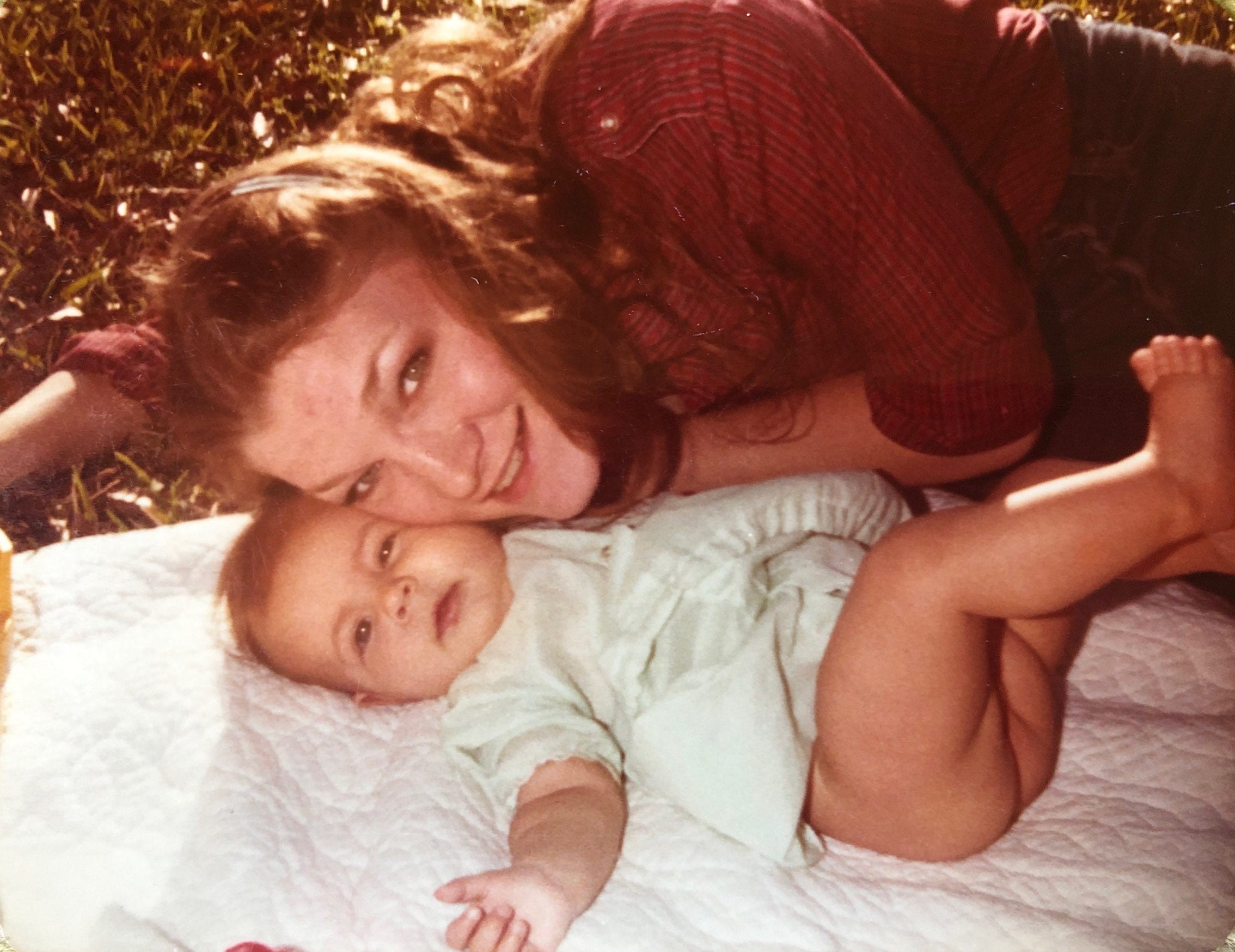
I just returned from Houston, Texas where I was attending the memorial service for the second of my aunts who’ve died this year. Aunt Alysoun, who was named after a Middle English poem, was only sixty years old and looks very much like her big sister, my mother, who also has cancer. We spent a lot of time on Friday sorting through old photo albums where family resemblances replicate themselves through generations: the noble nose of my great grandmother repeating itself on the face of my eighteen month old niece. The long brown hair of my young grandmother (who died of cancer at 52) mirrored in photos of me as a teenager. We hold our own essences over time too: My aunt Rose’s sweet nine-year-old face smiling down at infant me in the photograph still looks very like her fifty three year old face smiling at me across the table.
In Walter Benjamin’s Theses on the Philosophy of History, he notes that there is “a secret protocol between the generations of the past and that of our own” because “we have been expected upon this earth.” Our ancestors knew of our coming. As such, just like all previous generations, we possess what Benjamin calls a “weak messianic power, on which the past has a claim.” In other words, although we are not super heroes or gods—not capital m Messiahs with the power to redeem the past, present, or future with grand utopian visions or Paradise on earth—our small, contingent acts can disrupt the version of time that appears linear or inevitable. If we were glitter nail polish, the base color might be our ordinary positionality in the flow of time–our genetics, our culture, our place–and the glitter would be our power to change the course of history.
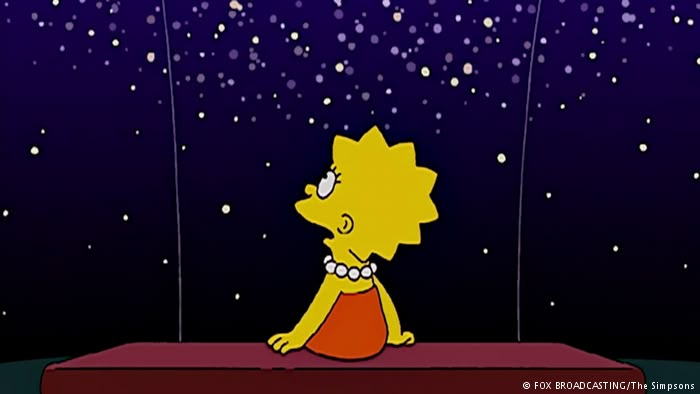
I recently thought about Benjamin’s idea of messianic time when I was reading Kaveh Akbar’s novel Martyr! over the last few days. In an early chapter that takes the form of a dialogue between Roya Shams, the protagonist’s deceased mother, and the character Lisa Simpson, Roya makes a similar point about the importance of the present in the flow of time, pointing out that:
When people think about traveling to the past, they do it with this wild sense of self-importance. Like, ‘gosh, I better not step on that flower or my grandfather will never be born.’ But in the present we mow our lawns and poison ants and skip parties and miss birthdays all the time. We never think about the effects of that stuff…. Nobody thinks of now as the future past.
…
It's the same way with the future. We plant a tree imagining our kids will play under it one day, or we go to some shitty business meeting because it might be the one where our boss singles us out for a promotion. Every tiny decision becomes mired with importance, and we’re immobilized. (58)
After Lisa responds with some confusion, Roya sums it up:
We have difficulty seeing our present selves in history the same way we view our past and future selves. That’s all I’m getting at. (59)
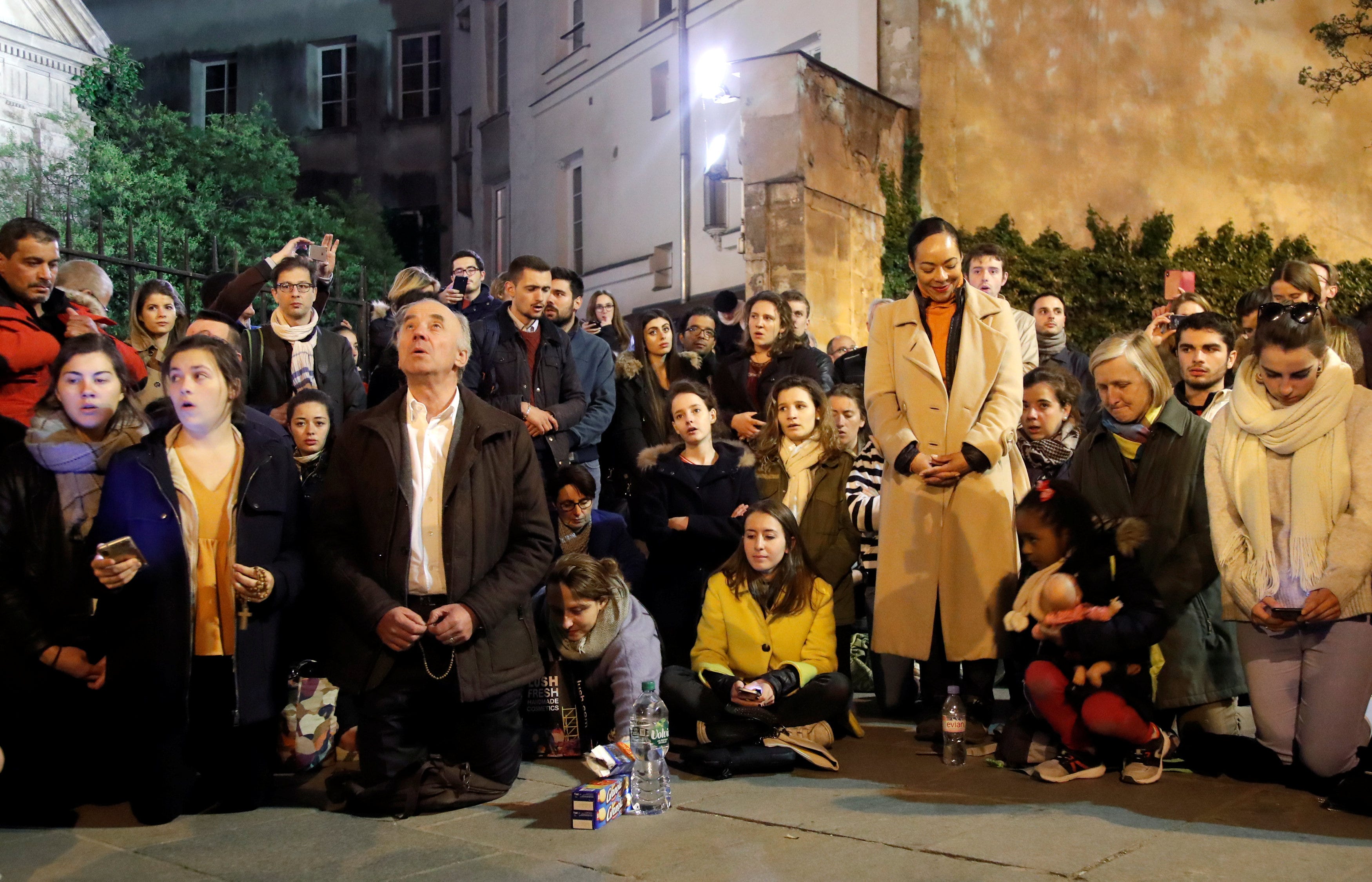
Last week at the Unitarian Universalist Fellowship that my family attends, our Justice Coordinator, Kaleb Graves, delivered a powerful sermon called “In Defense of Lost Causes” in which he talked about the hundreds of Parisians who rushed to help when a fire threatened to flatten Notre-Dame in April of 2019. The fire did not, in the end, destroy the whole cathedral, which reopened last year after three years of reconstruction. But, as Kaleb pointed out, that was not at all a foregone conclusion when the 400 firefighters and over 100 government workers risked their lives to save what they could, creating a human chain to rescue relics and works of art from destruction.
Kaleb, who is a self-described “Baptist preacher, apocalypse defier, and justice organizer,” urged everyone in the room to acknowledge that we cannot wait for a Messiah to save us from the current fires of climate change, fascism, income inequality, war, or genocide. Neither technology, nor a religious Messiah, nor a politician (Bernie or AOC) are going to show up and save us from the mess/es we’re in. Progressive political slogans and civil rights movements may have convinced many people on the Left that if we keep “fighting,” for justice, for peace, for the planet, that we will eventually “win.” But then what do we do when the arc of the universe seems to be bending away from justice and not toward it?
Kaleb’s answer, and mine, is that, like the firefighters at Notre-Dame and the crowds of Parisians who gathered to pray and sing while the heart of Paris burned—we must continue to work for just causes because they are just. To work for peace in times of perpetual war. To work for love in times of hate and indifference. To resist the quick slide into AI-outsourced thinking and the proliferation of resource-gorging data centers. If nothing else, this work and this resistance helps us to maintain our humanity, to heal some of the moral injury that we’re born into. But it’s also how we claim our messianic power, no matter how weak.
As you’ve probably noticed, I’m often wrestling with questions around how much “action” is “enough” action, with what kinds of responses matter, with what a “good life” looks like in this age of baked-in moral injury, and with the transformational potentials of art and literature.
After many months now of watching the genocide of civilians in Gaza, of praying, of gathering money to support the large family of my friend Mahmoud who sends harrowing videos and photos of the devastation and violence there every day, of calling my Senators to demand a ceasefire, peace and justice there have started to feel, for many, like a lost cause. It boggles the mind and confounds my spirit that people can see and know about the thousands of lives lost—many of them children—and not be spurred to outrage. And for me at least, the lost causness doesn’t feel limited to just Gaza, but has leaked a sense of lostness out beyond its edges into everything else. As my friend Cassie (who organized the group that is supporting Mahmoud) recently wrote on her fantastic newsletter, “My scientific proposal is that the genocide in Gaza beginning on October 7, 2023 caused the luck to run out in the world.”
As a result of this lost-cause feeling, this luckless feeling, I’m looking for ways to spend more time and energy and heart resisting this particular part of the death machine. A local friend and I are going to be gathering folks who want to organize locally, I’m going to start joining Mothers for Ceasefire at their Wednesday morning demonstrations in downtown Durham, and I’m imagining ways that poetry might be an avenue of resistance here in my own little circle of messianic influence. My idea (still nascent) is that I would print up a series of cards, little broadsides, with poems about Gaza and by Palestinian poets, and the flip side of the card would have links to donate to aid organizations and numbers to call our State Representatives. I would put stacks of these in places around town—coffee shops, vintage stores, yoga studios, maybe therapy offices.
Here is one of the poems I would include, by the poet Mosab Abu Toha:
Every child in Gaza is me.

Every mother and father is me.

Every house is my heart.

Every tree is my leg.

Every plant is my arm.

Every flower is my eye.

Every hole in the earth

is my wound.
My dear siblings on this planet, I am asking for your help.
I would love to hear your poem recommendations for short poems that I might include on these mini broadsides I would like to print to raise support for the people of Gaza. I’m also open to suggestions about this card idea—what information it should contain, where they could go, etc.
If you would like to help support the people of Gaza directly with food and basic supplies, please consider giving directly to the campaign we set up for Mahmoud’s family, or UN Crisis Relief or World Central Kitchen.
Tell me what you’re doing or what you dream of doing to activate your messianic glitter and invest more fully in the present’s place in the flow of time. How might we form a human chain and save at least some treasures from the cathedral as it burns?
Thank you, thank you, thank you.
Hi Sarah Rose, I'm so sorry about the losses your family has had to face this year. "On Time" made me think of a couple quotes I put in my newsletter a year or so ago. Ricardo Levins Morales wrote, "We don't just need our ancestors; they need us. We are their anchor point in the future: Someone to dream about. To fight for. To walk toward. We must walk toward those who wait for us." And, Kierkegaard wrote, "Life can only be understood backwards; but it must be lived forwards." Regarding the idea to create and distribute cards, I can probably print them for you (You know me!). It would keep an old man busy :)
This was beautiful, Sarah. Not sure how the Substack algorithm works but it sent me here. Feels like kismet.
I wrote this poem that explores the slippery and beautiful nature or our relation with one another. Kinship explored both in charming sentiment but also the haunting. It alludes to the atrocities happening in Gaza right now.
https://mikechristie.substack.com/p/beet-leaves